
Cracking Passwords Brute Force
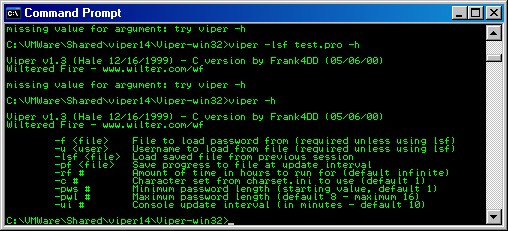
Learn how to program a password cracker in python. This is purely theoretical, this will not help you get back into your Facebook or gmail account. GITHUB: https.
The 's US$250,000 contained over 1,800 custom chips and could brute-force a DES key in a matter of days. The photograph shows a DES Cracker circuit board fitted on both sides with 64 Deep Crack chips.
Budidaya labu siam pdf merger. 15—200C pada malam hari. Tanaman labu siam memerlukan tanah yang gembur, berpasir, subur dan banyak mengandung humus. Budidaya Labu Siam Persiapan bibit Labu Siam diperbanyak dengan menggunakan labu yang sudah tua. Buah yang akan dijadikan bibit terlebih dahulu disimpan di tempat yang lembab. Budidaya labu siam pdf; Tag: budidaya labu siam pdf. Literatur Lengkap Budidaya Labu Siam (Sechium edule) Prospek Agribisnis. Budidaya labu kuning pdf; Tag: budidaya labu kuning pdf. Labu siam selain dimanfaatkan sebagai olahan sayuran,labu jenis ini juga memiliki kandungan yang tak. Budidaya Labu Siam Pdf Merge Labu Siam In English.
In, a brute-force attack consists of an attacker submitting many or with the hope of eventually guessing correctly. The attacker systematically checks all possible passwords and passphrases until the correct one is found. Alternatively, the attacker can attempt to guess the which is typically created from the password using a. This is known as an exhaustive key search. A brute-force attack is a that can, in theory, be used to attempt to decrypt any encrypted data (except for data encrypted in an manner). Such an attack might be used when it is not possible to take advantage of other weaknesses in an encryption system (if any exist) that would make the task easier.
When password-guessing, this method is very fast when used to check all short passwords, but for longer passwords other methods such as the are used because a brute-force search takes too long. Longer passwords, passphrases and keys have more possible values, making them exponentially more difficult to crack than shorter ones. Brute-force attacks can be made less effective by the data to be encoded making it more difficult for an attacker to recognize when the code has been cracked or by making the attacker do more work to test each guess.
Viaje del Parnaso Miguel de Cervantes Saavedra Viaje del ParnasoViaje del Parnaso Miguel de Cervantes Saavedra - 1 - PDF Creator - PDF4Free v2.0 http://www.pdf. Here you can download free juniper junos olive 12.1r1.9 for vmware shared files found in our database: junos srxsme 12.1R1.9 domestic.tgz 4shared.com junos-srxsme-12. If you took a Routing Engine out of a Juniper router and booted it in a blade server chassis, it would effectively be an Olive. Issuu is a digital publishing platform that makes it simple to publish magazines, catalogs, newspapers, books, and more online. Easily share your publications and get them in front of Issuu’s. Download aprender a hablar en publico vallejo najera pdf creator. Belo Horizonte| Brazil. Nazareth, Ethiopia; Parnamirim, Brazil; Belo Horizonte, Brazil; Belo Horizonte| Brazil.
One of the measures of the strength of an encryption system is how long it would theoretically take an attacker to mount a successful brute-force attack against it. Brute-force attacks are an application of, the general problem-solving technique of enumerating all candidates and checking each one. Contents • • • • • • • • • • • Basic concept [ ] Brute-force attacks work by calculating every possible combination that could make up a password and testing it to see if it is the correct password. As the password's length increases, the amount of time, on average, to find the correct password increases exponentially.
Theoretical limits [ ] The resources required for a brute-force attack grow with increasing, not linearly. Although U.S. Export regulations to 56-bit (e.g. ), these restrictions are no longer in place, so modern symmetric algorithms typically use computationally stronger 128- to 256-bit keys. There is a physical argument that a 128-bit symmetric key is computationally secure against brute-force attack. The so-called implied by the laws of physics sets a lower limit on the energy required to perform a computation of kT ln 2 per bit erased in a computation, where T is the temperature of the computing device in, k is the, and the of 2 is about 0.693.
No irreversible computing device can use less energy than this, even in principle. Thus, in order to simply flip through the possible values for a 128-bit symmetric key (ignoring doing the actual computing to check it) would, theoretically, require 2 128 − 1 bit flips on a conventional processor.
If it is assumed that the calculation occurs near room temperature (~300 K), the Von Neumann-Landauer Limit can be applied to estimate the energy required as ~10 18, which is equivalent to consuming 30 of power for one year. This is equal to 30×10 9 W×3 s = 9.46×10 17 J or 262.7 TWh ().
[ ] The full actual computation – checking each key to see if a solution has been found – would consume many times this amount. Furthermore, this is simply the energy requirement for cycling through the key space; the actual time it takes to flip each bit is not considered, which is certainly. However, this argument assumes that the register values are changed using conventional set and clear operations which inevitably generate. It has been shown that computational hardware can be designed not to encounter this theoretical obstruction (see ), though no such computers are known to have been constructed.
Modern are well-suited to the repetitive tasks associated with hardware-based password cracking As commercial successors of governmental solutions have become available, also known as, two emerging technologies have proven their capability in the brute-force attack of certain ciphers. One is modern (GPU) technology, [ ] the other is the (FPGA) technology. GPUs benefit from their wide availability and price-performance benefit, FPGAs from their energy efficiency per cryptographic operation. Both technologies try to transport the benefits of parallel processing to brute-force attacks. In case of GPUs some hundreds, in the case of FPGA some thousand processing units making them much better suited to cracking passwords than conventional processors. Various publications in the fields of cryptographic analysis have proved the energy efficiency of today's FPGA technology, for example, the FPGA Cluster computer consumes the same energy as a single PC (600 W), but performs like 2,500 PCs for certain algorithms.